
Project information
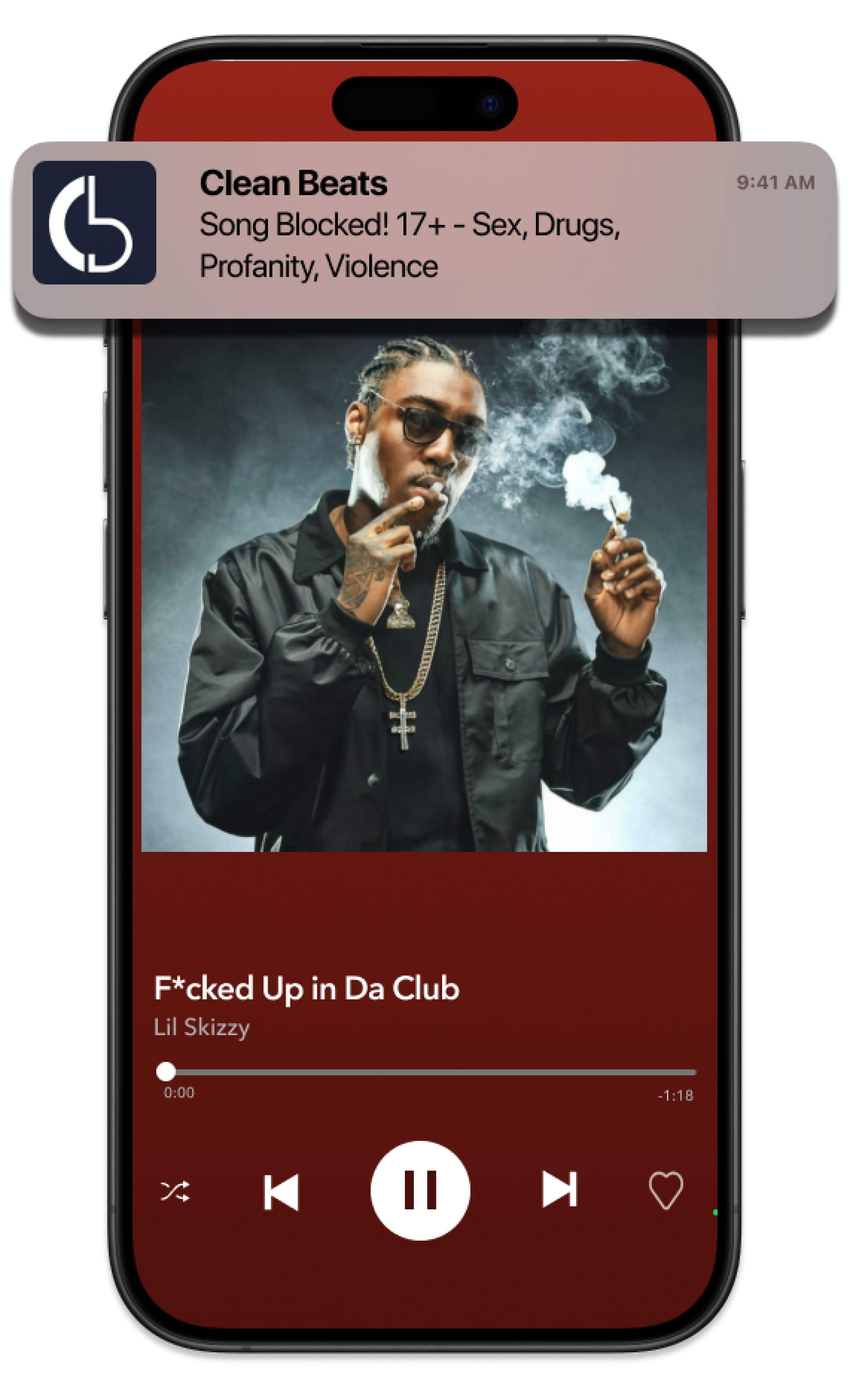
- Overview: AI-powered parental controls for Spotify that filter harmful lyrics while preserving the music experience for teens.
- Role: Founder, Designer & Developer
- Duration: Ongoing (2024-Present)
- Tech Stack: Next.js 15, React 19, Tailwind CSS, Spotify API, AI/ML for content analysis
- Problem: Parents have limited control over explicit content their teens encounter on streaming platforms.
- Goal: Create a seamless parental control layer that filters inappropriate lyrics without disrupting the listening experience.
The Challenge
Music streaming platforms like Spotify offer explicit content filters, but they're often all-or-nothing—either blocking entire songs or allowing everything. Parents want more nuanced control, and teens want their music. The challenge was bridging this gap with intelligent filtering.
Lyric Content
Popular songs often contain explicit language, drug references, or mature themes that parents may want to filter for younger listeners.
Binary Controls
Existing "Explicit Content" filters block entire songs, frustrating teens who want to listen to current hits with their friends.
Trust & Privacy
Parents want oversight without invasive monitoring. Teens want autonomy. Finding the balance is key.
Solution: AI-Powered Lyric Analysis
CleanBeats uses AI to analyze song lyrics in real-time, categorizing content by type (profanity, violence, substance use, etc.) and severity. Parents set their comfort thresholds, and the system intelligently filters or allows content.
- Lyrics analyzed for multiple content categories
- Severity scoring from mild to severe
- Context-aware analysis (not just keyword matching)
- Continuous learning from new music releases
- Category-specific filtering (profanity, violence, etc.)
- Adjustable sensitivity thresholds
- Allowlist for pre-approved content
- Weekly listening reports (optional)
Key Features
Spotify Integration
Seamless OAuth connection with Spotify. CleanBeats works as a layer on top of the existing Spotify experience—no new app to learn.
Smart Alternatives
When a song is filtered, CleanBeats suggests "clean" versions or similar songs that pass the parent's criteria.
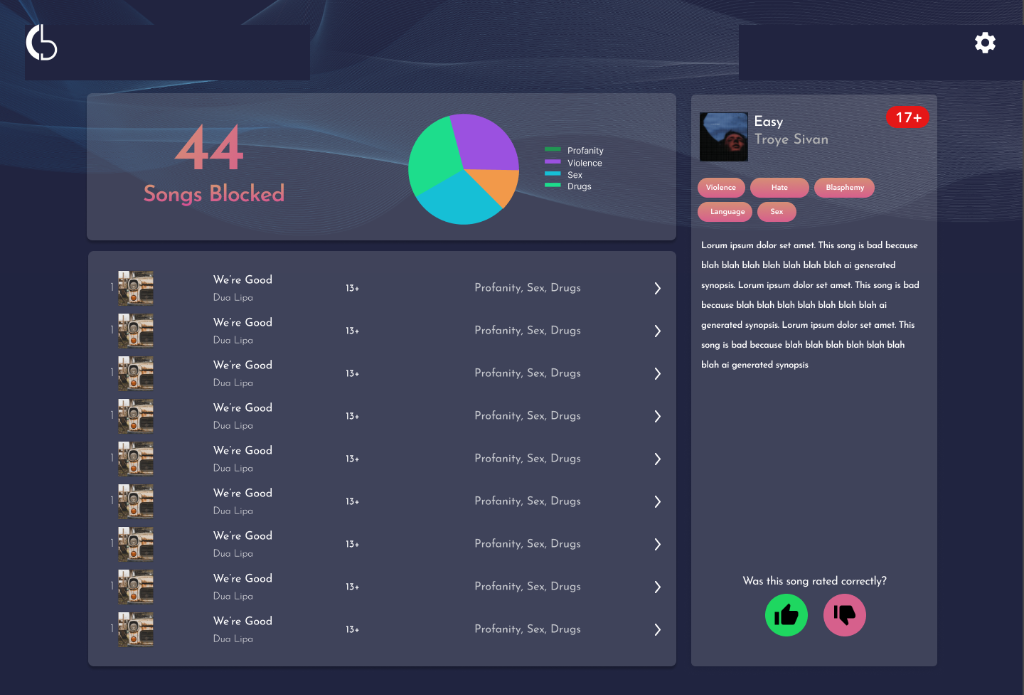
Dashboard Analytics
Parents can view listening trends, blocked content summaries, and genre preferences without invasive song-by-song monitoring.
Teen-Friendly Experience
Teens see a normal Spotify experience. Filtered songs simply don't appear—no awkward "blocked" messages.
Design Approach
CleanBeats required balancing two very different user personas with opposing goals. The design philosophy centered on:
- Invisible to Teens - Filtering happens in the background. Teens see a curated Spotify, not a restricted one.
- Empowering for Parents - Intuitive controls that don't require technical knowledge. Set it and forget it.
- Trust-Based - No invasive monitoring. Parents get insights, not surveillance.
- Modern Aesthetic - Gradient-rich, dark mode design that appeals to music-loving families.
Technical Implementation
- Next.js 15 + React 19 - Cutting-edge React framework with App Router for optimal performance.
- Spotify Web API - OAuth integration for playlist access, playback control, and library management.
- AI Lyric Analysis - Natural language processing to classify song content beyond simple keyword matching.
- Real-time Filtering - Zustand state management for instant UI updates as content is filtered.
Reflections & Next Steps
-
AI Content Moderation is Nuanced
Simple keyword blocking creates false positives. Context-aware AI is essential for accurate content classification without over-filtering.
-
Dual Persona Design
Designing for parents AND teens required careful UX separation. The same backend powers two very different experiences.
-
Future: Mobile App & More Platforms
Next steps include dedicated mobile apps and expansion to Apple Music and YouTube Music.